

How to Get Skinny Legs Without Building Muscle: Science-Backed Guide
Can You Slim Your Legs Without Getting Bulky? For many people—especially women with mesomorph or endomorph body types—the lower body tends to build muscle quickly. A few sessions of squats, lunges, or hill sprints can result in legs that feel bulkier rather than slimmer.
If your goal is lean, toned, slender legs—not muscular size—then your training, diet, and cardio must all follow a completely different approach from traditional strength workouts.
This guide breaks down evidence-based strategies to:
- reduce body fat in the lower body
- tone your legs without adding volume
- select exercises that elongate rather than bulk
- program cardio sessions for fat burn, not muscle growth
- understand your body type and optimize around it
- avoid the exercises that cause bulky legs
By the end, you’ll know exactly how to train, eat, and structure your routine to achieve slim, defined, athletic legs—without unwanted muscle mass.
Understanding the Science of Slim Legs
Before starting any program, it’s crucial to understand why some people’s legs bulk easily and how muscle science works.
Muscle Growth vs. Muscle Tone: What’s the Difference?
- Muscle growth (hypertrophy) = increase in muscle size
- Muscle tone = muscle firmness and definition without bulk
- Slim legs = low subcutaneous fat + toned muscles + minimal hypertrophy
To get slim legs, your plan must:
- ✓ Reduce fat
- ✓ Increase definition
- ✗ Avoid hypertrophy-triggering training
1. Know Your Body Type (Determines 80% of Results)
Different body types respond differently to workouts. Understanding yours ensures you avoid training that triggers bulk.
Ectomorphs (Naturally Slim)
- Fast metabolism, low muscle mass
- Goal: reduce lower-body fat and lightly tone
- Respond well to light strength + moderate cardio
Mesomorphs (Athletic, Gain Muscle Easily)
- Naturally muscular
- Gain leg size fast from squats, lunges, and HIIT
- Best approach: high-rep, low-resistance, longer cardio
Endomorphs (Store Fat Easily, Especially in Legs & Hips)
- Gain both fat and muscle quickly
- Lower-body fat reduction requires consistent steady-state cardio
- Strength training must avoid heavy loads
2. Nutrition Strategy for Slim Legs
You cannot slim your legs without lowering your overall body fat percentage.
Caloric Deficit (Science-Based Requirement)
A gentle deficit of 300–500 calories/day promotes fat loss without triggering muscle breakdown or metabolic slowdown.
Eat More of These Foods (Fat-Loss Friendly)
- Lean protein (30% of daily calories)
- Whole grains
- Fruits + vegetables
- High-fiber foods
- Omega-3 fats
- Water (2–3 L/day)
Avoid These if You Want Slim Legs
- Highly processed carbs
- Sugary drinks
- Deep-fried foods
- Overeating protein (can promote muscle gain in mesomorphs)
Note: High protein is good, but too much protein combined with leg workouts can accelerate muscle size. Moderation is key.
3. Best Cardio to Slim Legs Without Adding Bulk
Cardio is the #1 tool for reducing leg fat—but only when performed correctly.
Ideal Heart Rate Zone: 60–70% of Max HR
This promotes fat burning while preventing hypertrophy.
Top Slim-Leg Cardio Exercises (Ranked)
1. Walking on Incline (Gold Standard)
- Burns fat without adding muscle
- Great for slimming thighs + calves
- 30–45 minutes per session
2. Light-Resistance Cycling
- Keep RPM at 80–100
- Avoid high resistance to prevent quad bulk
3. Swimming
- Full-body toning
- Zero impact, no hypertrophy
- 45–60 minutes ideal
4. Elliptical Machine
- Low resistance
- 30–45 minutes
- Improves circulation in thighs & hips
5. Low-Intensity Jogging (NOT sprinting)
- Helps reduce fat
- Avoid uphill running (builds calves & quads)
4. Leg-Slimming Workout Routine (No Bulk)
This routine prioritizes:
- long, lean muscles
- stability
- controlled activation
- high reps + bodyweight only
Perform 3–4x/week, alternating between the two circuits.
Circuit A — Toning + Lengthening
1. Donkey Kicks
Start on all fours with hands under shoulders and knees under hips. Keeping your knee bent at 90 degrees, lift your foot towards the ceiling. Squeeze your glutes at the top, then lower back down.
Beginner: 12–15 reps | Advanced: 20 reps
2. Bird Dog
Start on all fours. Simultaneously extend your right arm forward and left leg back, creating a straight line from fingertips to heel. Hold for 2–3 seconds, then return to start. Repeat on the opposite side.
Beginner: 12–15 per side | Advanced: 20
3. Rainbow Leg Lifts
Kneel on your right knee with your left leg extended to the side. Lift your left leg, tracing a rainbow arc over to your right side. Return to start in a controlled manner.
Beginner: 12–15 | Advanced: 20
4. Glute Bridge Pulses
Lie on your back with knees bent and feet flat on the floor. Lift your hips into a bridge position. From here, pulse your hips up and down in small movements. 3 pulses count as one rep.
Beginner: 12–15 | Advanced: 20
5. 3-Legged Dog Hold
Start in a downward dog position. Lift one leg towards the ceiling, keeping it straight. Hold for a few seconds, then lower.
Beginner: 6–8 per leg | Advanced: 10
Circuit B — Fat-Burning Cardio + Sculpting
1. Alternating Front Kicks
Stand tall with feet hip-width apart. Begin jogging in place, lifting your knees high. Every few jogs extend one leg forward in a front kick. Alternate legs, focusing on controlled movements and engaging your core throughout.
Duration: 45 seconds
2. Bench Hops
Stand beside a low, sturdy bench or step. Hop sideways over the bench, landing softly on both feet. Immediately hop back to the starting position. Focus on quick, light landings.
Duration: 45 seconds
3. Mountain Climbers
Start in a high plank position. Alternately drive your knees towards your chest as if running in place. Maintain a flat back and engage your core throughout.
Beginner: 12–15 per leg | Advanced: 20
4. High Knee Runs
Run in place, lifting your knees as high as comfortable with each step. Pump your arms and maintain good posture. Focus on quick, controlled movements.
Duration: 45 seconds
5. Step-Ups (Bodyweight Only)
Stand in front of a sturdy step or bench. Step up with one foot, drive the opposite knee up, then step back down. Alternate legs with controlled movement.
10 per leg
5. Exercises to Avoid If You Don’t Want Bulky Legs
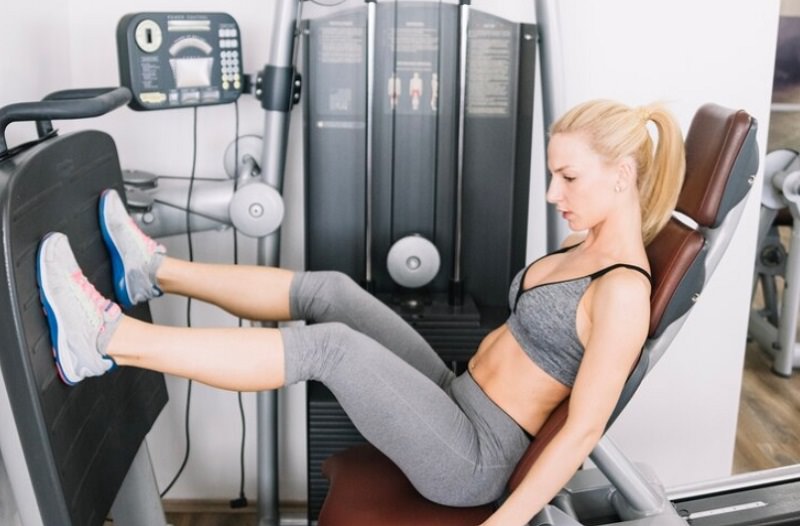
These movements stimulate hypertrophy and add size:
- ❌ Heavy weight squats
- ❌ Weighted lunges
- ❌ Leg press machine
- ❌ Deadlifts (especially RDLs)
- ❌ Box jumps / plyometrics
- ❌ Sprinting or hill sprints
- ❌ Incline treadmill running with heavy resistance
Avoiding these ensures your lower body stays lean and toned.
Myth-Busting Section: Biggest Misconceptions About Slimming Legs
Myth 1: Spot Reduction Can Slim Your Thighs
Fact: You cannot target fat loss in just the legs. Fat reduction is systemic, not localized.
Myth 2: Strength Training Always Makes Legs Bulky
Truth:
- Bulk = high resistance + low reps
- Tone = low resistance + high reps
Strength training is safe when done correctly.
Myth 3: Running Automatically Slims Legs
Long-distance running can slim legs, but sprinting builds muscle—especially in quads and calves.
Myth 4: Pilates and Yoga Don’t Help Slim Legs
They absolutely do.
These activities lengthen muscle fibers, improve posture, and reduce leg thickness by reducing tension in the fascia.
Myth 5: Cutting Carbs Is Required for Slim Legs
Carbs don’t cause bulk.
Excess calories cause fat and muscle growth.
6. Monitoring Progress The Right Way
To judge results accurately:
Measure These Monthly
- Thigh circumference
- Calf circumference
- Hip circumference
- Overall body fat %
Track These Weekly
- Weight (same time each week)
- Photos front + side + back every 2–3 weeks in consistent clothing and lighting — visual comparisons often reveal changes that measurements miss.
Small changes accumulate into big transformations.
Conclusion: You Can Get Skinny Legs Without Building Muscle
Slim legs require a science-based approach—not random workouts.
To achieve lean, toned, sculpted legs:
- ✔ Use steady-state cardio (60–70% HR)
- ✔ Avoid heavy resistance leg training
- ✔ Use high-rep, bodyweight exercises
- ✔ Maintain a small calorie deficit
- ✔ Choose low-impact movements
- ✔ Be consistent
With dedication and the right strategy, your legs will become slimmer, more defined, and beautifully toned—without the bulky appearance you fear.
Maintaining Your Results Long-Term Once you’ve achieved your desired leg shape, sustain it by continuing balanced nutrition at an appropriate calorie intake, keeping up regular cardio sessions, and incorporating leg-toning exercises consistently. Adjust your workout intensity and frequency as your body adapts and your fitness evolves. Remember that slim, toned legs are the result of ongoing habits — not a one-time effort. Stay consistent, and the results will last.
FAQs
How long does it take to get skinny legs?
Typically 4–12 weeks, depending on body fat, routine, and metabolism.
Can walking slim my legs?
Yes—especially incline walking. It is one of the best ways to reduce leg fat without adding muscle.
Why do my legs bulk easily?
Mesomorphs and endomorphs have higher muscle-fiber density, meaning their legs gain size quickly from resistance training.
Does Pilates help slim legs?
Yes. Pilates elongates muscles, reduces tension, and creates a leaner appearance.
Will cutting carbs slim my legs?
Reducing calories—not carbs—is what leads to fat loss.