
Disadvantages of Convenience Sampling (Explained Clearly)
Convenience sampling is one of the most commonly used sampling techniques in research due to its simplicity, speed, and low cost. However, despite its practical appeal, the disadvantages of convenience sampling can significantly affect the accuracy, reliability, and credibility of research findings.
In this guide, we explain what convenience sampling is, why researchers use it, and—most importantly—the major disadvantages that limit its effectiveness, supported by real-world examples and academic reasoning.
Quick Answer: Why Is Convenience Sampling Problematic?
Convenience sampling is problematic because it:
- Produces biased and unrepresentative samples
- Limits generalizability of results
- Increases researcher and selection bias
- Weakens external validity and replication
- Introduces unknown and unmeasurable errors
While useful in early-stage or exploratory research, it is not suitable for studies that aim to draw conclusions about an entire population.
What Is Convenience Sampling?
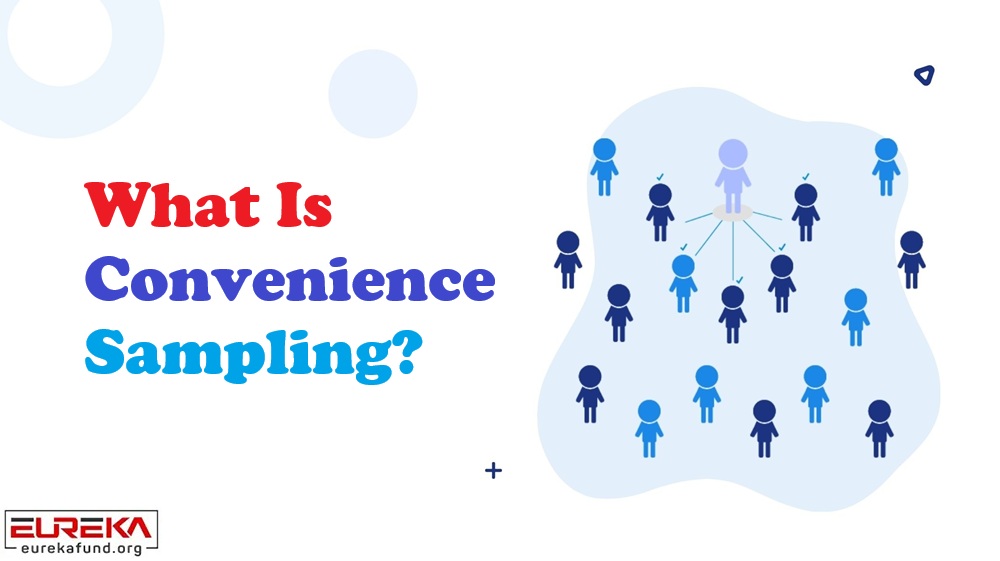
Convenience sampling is a non-probability sampling method where participants are selected based on ease of access and availability, rather than random selection.
Instead of giving every individual in a population an equal chance to be selected, researchers choose participants who are:
- Nearby
- Willing
- Easily reachable
- Already present in a given setting
Because selection is not random, convenience sampling sacrifices statistical rigor for speed and feasibility.
According to standard research methodology literature, convenience sampling is primarily recommended for exploratory and pilot studies, where the goal is to gain preliminary insights rather than draw statistically generalizable conclusions. Textbooks such as Research Methods for Business by Sekaran & Bougie and Sampling Techniques by William G. Cochran emphasize that while convenience sampling is practical, it should be used cautiously when external validity and population inference are required.
Researchers are therefore advised to clearly acknowledge its limitations when reporting findings based on convenience samples.
Convenience Sampling vs Random Sampling
| Aspect | Convenience Sampling | Random Sampling |
| Sampling Type | Non-probability sampling | Probability sampling |
| Participant Selection | Based on ease of access and availability | Based on random selection methods |
| Representativeness | Low – may not reflect the population | High – better population representation |
| Bias Risk | High risk of selection and researcher bias | Low risk of bias when properly executed |
| Cost & Time | Low cost and fast | More expensive and time-consuming |
| Generalizability | Limited | Strong |
| Statistical Validity | Weak for inferential statistics | Strong for hypothesis testing |
| Replicability | Difficult to replicate | Easier to replicate |
| Best Used For | Pilot studies, exploratory research | Large-scale, formal research studies |
Common Examples of Convenience Sampling
Convenience sampling is frequently used in everyday research scenarios, such as:
- Mall surveys, where researchers approach shoppers who happen to be present
- Student-based studies, using classmates or volunteers from a university
- Clinic-based research, selecting patients already attending appointments
- Street interviews, collecting opinions from people in busy public areas
These approaches are efficient—but efficiency comes at a methodological cost.
Key Disadvantages of Convenience Sampling
Below are the most important limitations, explained clearly and practically.
1. Limited Representativeness

Convenience samples rarely reflect the true diversity of the population.
Because participants are selected based on availability, the sample may overrepresent:
- Certain age groups
- Socioeconomic classes
- Geographic locations
- Education levels
As a result, findings cannot reliably represent the broader population.
2. Undercoverage Bias

Convenience sampling often excludes entire segments of the population.
For example:
- People who are unavailable at specific times
- Individuals without access to certain locations
- Groups less willing to participate
This leads to systematic undercoverage, meaning key perspectives are missing from the data.
3. Researcher Selection Bias

Researchers may—intentionally or unintentionally—choose participants who:
- Are easier to communicate with
- Support the researcher’s assumptions
- Are more cooperative or agreeable
This introduces subjective judgment, which undermines objectivity and weakens scientific integrity.
4. Unknown Sampling Error

One of the most serious disadvantages of convenience sampling is that sampling error cannot be measured.
Because the sample is non-random:
- There is no reliable way to calculate margins of error
- The extent of bias remains unknown
- Statistical confidence is compromised
This makes conclusions less trustworthy.
5. Poor External Validity

External validity refers to how well results apply beyond the sample.
Convenience sampling has low external validity because:
- Results may only apply to the specific group studied
- Findings may not hold true in other settings, cultures, or populations
This severely limits the usefulness of the research for decision-making or policy development.
6. Difficulty Replicating Results

Because convenience samples depend on:
- Time
- Location
- Availability
- Willingness
The same study conducted again may produce very different results.
This lack of reproducibility weakens the scientific reliability of the findings.
7. Increased Risk of Inaccurate or False Data

Participants selected out of convenience may:
- Rush responses
- Provide socially desirable answers
- Answer without careful consideration
This is especially common when people are surveyed during daily activities, reducing data accuracy.
8. Limited Ability to Analyze Subgroups

Convenience samples often lack sufficient diversity or size to:
- Compare age groups
- Analyze gender differences
- Study minority populations
This makes subgroup analysis unreliable or statistically invalid.
9. Lack of Sample Diversity

Because participants often share similar characteristics, convenience sampling can result in:
- Homogeneous samples
- Narrow viewpoints
- Limited perspectives
This reduces the depth and richness of the research findings.
10. Statistical Assumption Violations

Many statistical tests assume:
- Random sampling
- Independence of observations
Convenience sampling violates these assumptions, potentially leading to:
- Misleading statistical results
- Incorrect inferences
- Overstated conclusions
When Is Convenience Sampling Appropriate?
Despite its limitations, convenience sampling can be useful in certain situations:
- Exploratory research
- Pilot studies
- Preliminary hypothesis testing
- Situations with severe time or budget constraints
It is acceptable when:
Some data is better than no data
Results are not meant to be generalized
Findings are clearly labeled as exploratory
When Should Convenience Sampling Be Avoided?
Avoid convenience sampling when:
- Results will inform policy or decisions
- Statistical generalization is required
- Accuracy and representativeness are critical
- Peer-reviewed or high-stakes research is involved
Conclusion
Convenience sampling offers speed and simplicity, but its disadvantages significantly limit research quality. Bias, low representativeness, unknown errors, and weak generalizability make it unsuitable for studies that aim to draw population-wide conclusions.
Researchers should use convenience sampling with caution, clearly acknowledge its limitations, and avoid overstating findings. Choosing the right sampling method is ultimately a balance between practical constraints and scientific accuracy—and knowing when convenience sampling is appropriate is a critical research skill.
FAQs
Why is convenience sampling considered biased?
Because participants are not randomly selected, certain groups are overrepresented while others are excluded.
Is convenience sampling ever acceptable?
Yes, for exploratory or pilot research where generalization is not the goal.
What is the biggest disadvantage of convenience sampling?
The inability to generalize findings to the broader population.
Is convenience sampling qualitative or quantitative?
It can be used in both, but limitations apply in either case.