
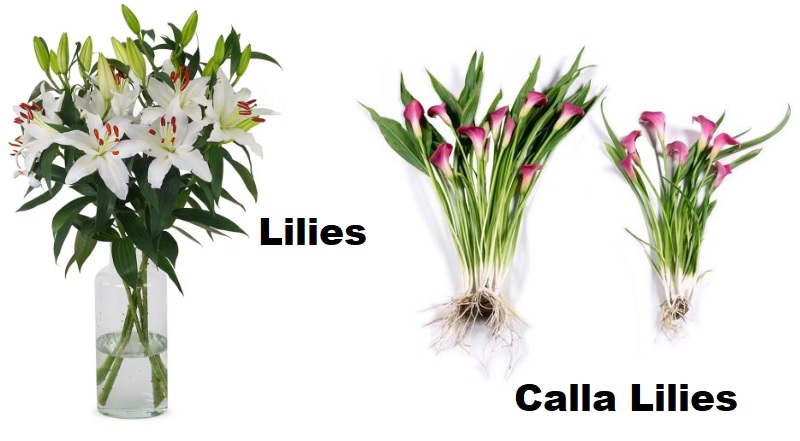
Lilies vs. Calla Lilies: What’s the REAL Difference? (Updated 2025 Guide)
Flowers have always played an emotional and visual role in human life — from weddings and celebrations to memorials and everyday décor. Among all popular blooms, lilies and calla lilies are two of the most loved choices because of their elegance, symbolism, and beauty.
But here’s the surprise:
Even though both have the word “lily” in their name, botanically they are not related at all.
They come from different plant families, grow differently, have different care needs, and serve different purposes in floral design. This confusion has existed for years, which makes understanding their differences important — especially for gardening, gifting, interior décor, or event styling.
This article explains each flower in detail, their types, differences, usage, symbolism, pros, and cons so you can choose the perfect one for any occasion.
🌼 What Exactly is a True Lily? (Botanical Genus: Lilium)
True lilies belong to the botanical genus Lilium, a group of flowering plants known for their upright stems, trumpet-shaped blossoms, and dramatic beauty. They grow from layered bulbs, much like onions, and typically feature six large petals that may be spotted, striped, or plain depending on the variety.
Lilies have been used in gardens and floral arrangements for centuries because of their impressive height, striking colors, and — in many varieties — intense, captivating fragrance. A well-placed lily in the garden instantly adds elegance and visual drama.
🌱 Growth & Appearance
True lilies grow vertically, usually between 2 to 6 feet, depending on the type. Because they bloom early (especially Asiatic varieties), they are often one of the first flowers to brighten summer gardens. Their petals are thick, bold, and come in a stunning range of colors — including white, orange, red, yellow, pink, burgundy, and even near-black.
Lilies are also incredibly low-maintenance, requiring only well-drained soil and a sunny spot to thrive.
🌺 Popular Types of True Lilies (Most Common Hybrids)
Although dozens of lily varieties exist, a few hybrids dominate the floral and gardening world. These offer the most beauty, fragrance, and versatility:
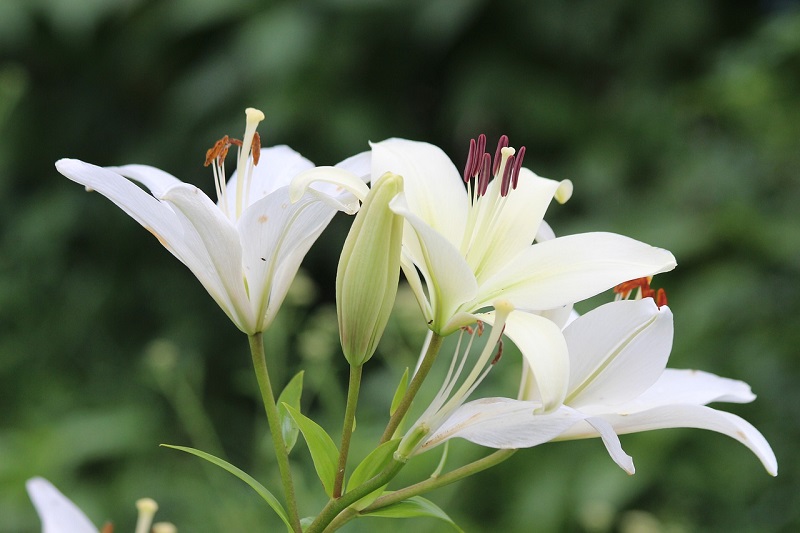
1. Oriental Lilies
Oriental lilies are among the most luxurious and sought-after blooms. They flower in mid to late summer and are known for their intensely fragrant, large, star-shaped blossoms. Colors include soft pastels and deep pinks. They can reach up to 4 feet tall, making them perfect for impactful garden displays.
2. Asiatic Lilies
Asiatic lilies bloom early — often before any other lilies. Their main charm lies in their vivid, eye-catching colors like orange, red, lemon, and yellow. However, unlike Oriental lilies, they are odorless, which makes them perfect for people sensitive to strong floral scents.
3. Trumpet Lilies
As the name suggests, their blooms resemble a long trumpet. They are extremely elegant and are often used in formal bouquets. Their fragrance is similar to Oriental lilies but slightly softer.
4. Easter Lilies
These pristine white lilies bloom indoors around Easter. They symbolize purity, hope, and renewal. Because they bloom early, they are one of the few lilies that naturally grow in spring.
Lilies come in even more varieties — including tiger lilies, martagon lilies, and longiflorum lilies — but many of these are not true Lilium species.
🌷 What About Calla Lilies? (Botanical Genus: Zantedeschia)
Unlike true lilies, calla lilies are not lilies at all. They belong to the genus Zantedeschia, part of the arum family, which also includes peace lilies and anthuriums.
Calla lilies feature a unique, sculptural look: a single curved petal (called a spathe) wrapped around a central yellow spike (the spadix). Because of their modern, minimalistic appeal, they are hugely popular in wedding bouquets, luxury décor, and interior styling.
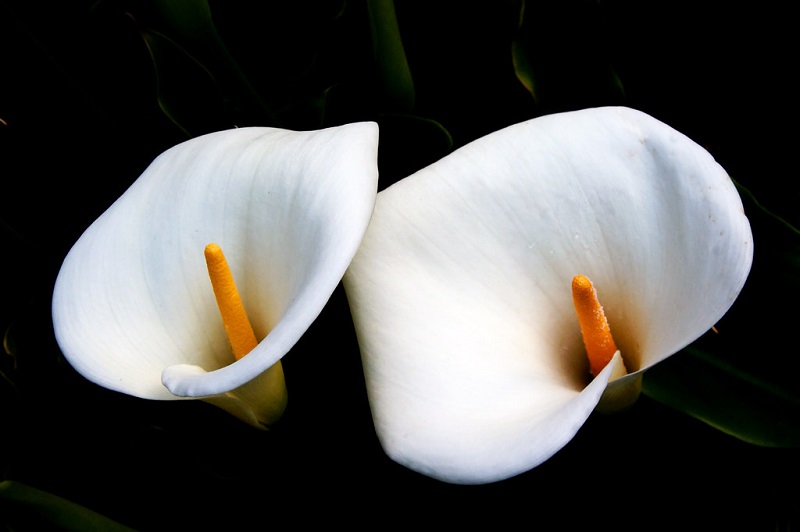
🌱 Appearance & Growth
Calla lilies grow from rhizomes rather than bulbs and reach a height of about 2–3 feet. Their leaves are shaped like arrows and often have white speckles. While white is the most traditional calla color, modern hybrids come in purple, pink, yellow, green, and even deep black.
⚠️ Toxicity Note
Calla lilies contain calcium oxalate crystals and are toxic to humans and pets. They must not be ingested.
🌸 Lilies vs. Calla Lilies: Full Comparison
Even though both flowers are beautiful, they cater to very different needs.
🌼 Botanical Family
- Lilies: Genus Lilium
- Calla Lilies: Genus Zantedeschia (not true lilies)
🌺 Bloom Structure
- Lilies: Six-petaled, wide-open blooms
- Calla Lilies: One curled petal forming a cup/tube
🌱 Growth Pattern**
- Lilies: Tall stems, bulb-grown
- Callas: Shorter, rhizome-grown
🌺 Fragrance
- Lilies: Strong fragrance (Oriental, Trumpet) or none (Asiatic)
- Callas: Usually mild or no fragrance
🐾 Safety
- Lilies: Toxic to cats (especially true lilies)
- Callas: Toxic to pets + humans if ingested
🎀 Which Should You Choose? Ideal Uses
Choose True Lilies If:
- You want fragrance-filled rooms
- You enjoy dramatic colors and large blooms
- You’re decorating outdoors or making traditional bouquets
Choose Calla Lilies If:
- You want modern, minimalistic flower arrangements
- The recipient prefers pollen-free flowers
- You need elegant flowers for weddings
Avoid Calla Lilies If:
- Children, cats, or dogs are in the home
🌿 Final Thoughts
Lilies and calla lilies are equally stunning and versatile but differ significantly in structure, fragrance, safety, and botanical origin. Understanding these distinctions helps you select the perfect flower for any event, décor theme, or garden style.
Whether you prefer the fragrant drama of true lilies or the modern elegance of calla lilies, both blooms offer unique beauty and symbolism — ensuring you always have the right choice for the right moment.