
Why Are the Dead Sea Scrolls Important in Christianity? Text, History, and Theology Explained
For many Christians, the Bible is not just a sacred book—it is the foundation for faith, doctrine, and daily life. That is why questions about where biblical texts come from, how accurately they were preserved, and what people believed around the time of Jesus matter so deeply.
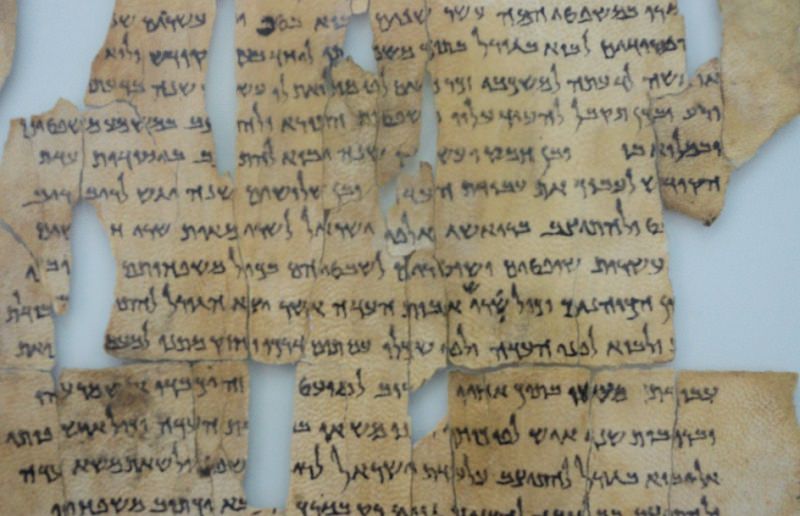
The Dead Sea Scrolls, discovered in caves near the Dead Sea in the mid‑20th century, are among the most important archaeological finds for anyone interested in the Bible’s reliability and early Jewish and Christian history. These fragile manuscripts are about 2,000 years old and include the oldest known copies of many Old Testament books, along with writings from a Jewish community that lived in the final centuries before and during the time of Jesus.
Their discovery has reshaped biblical scholarship, sharpened discussions about prophecy and messianic expectations, and provided an unparalleled look into the religious world that formed the backdrop of early Christianity.
This guide explains everything you need to know about why the Dead Sea Scrolls are importance in Christianity—clearly, practically, and with real-world theological and historical examples.
Key Takeaway
The Dead Sea Scrolls are crucial to Christianity because they provide the oldest known copies of many Old Testament texts, confirm the remarkable stability of the biblical text over centuries, and reveal a rich Jewish religious world—messianic hopes, apocalyptic expectations, and scriptural interpretation—that shaped the context into which Christianity emerged.
What Are the Dead Sea Scrolls?
The Dead Sea Scrolls are a collection of ancient Jewish manuscripts discovered in caves near Qumran, close to the northwestern shore of the Dead Sea. They were written roughly between the 3rd century BCE and the 1st century CE, placing them in the period known as Second Temple Judaism—the very era into which Jesus and the early church were born.
The collection includes thousands of fragments and more than 900 manuscripts, written mainly in Hebrew, with some in Aramaic and a few in Greek. Among them are copies of almost every book of the Hebrew Bible (Old Testament), along with prayers, legal documents, community rules, biblical commentaries, and apocalyptic writings.
For Christians, the Dead Sea Scrolls are like a time capsule. They show what Jewish communities were reading, believing, and expecting in the centuries leading up to and overlapping with the New Testament period, providing a vivid backdrop for the world of Jesus and the apostles.
Discovery, History, and Background
The first scrolls were found in 1947 when a young Bedouin shepherd reportedly tossed a stone into a cave near Qumran and heard the sound of breaking pottery. Inside, he and others later found clay jars holding ancient leather scrolls. Over the next decade, more scrolls and fragments were discovered in a total of eleven caves in the surrounding area.
Scholars soon realized that these manuscripts were extraordinarily old—many dating from about 250 BCE to 68 CE, when the Qumran site was likely abandoned during the Roman campaigns around the time of the Jewish War. That means some scrolls were written just decades before or even during the time of Jesus and the early church.
The discovery transformed the study of Second Temple Judaism. Before the scrolls, much of what scholars knew about this period came from later sources. The scrolls brought voices from that era itself—prayers, laws, and interpretations that were actually in circulation at the time.
Types of Texts in the Dead Sea Scrolls
The Dead Sea Scrolls are not a single book but a library. For understanding Christianity, it helps to distinguish several main categories:
1. Biblical Manuscripts
These are copies of books later included in the Hebrew Bible. Almost every Old Testament book is represented, with the notable exception of Esther. Some books, like Psalms, Isaiah, and Deuteronomy, appear in multiple copies, suggesting they were especially important.
These manuscripts allow direct comparison between the text used around the time of Jesus and the standard Hebrew Bible used today, showing a high degree of continuity along with some variations in wording, order, and detail.
2. Apocryphal and Pseudepigraphal Works
These texts are Jewish religious writings not included in the traditional Hebrew Bible but known from other ancient sources (for example, some works known in the Apocrypha or Pseudepigrapha). They shed light on ideas such as wisdom, judgment, angels, and the afterlife that were circulating in the broader Jewish world.
Such writings help explain why certain concepts—like resurrection, final judgment, or a coming savior—were already familiar by the time the New Testament was written.
3. Sectarian / Community Texts
These documents appear to reflect the beliefs, rules, and expectations of the community linked to Qumran.
They include:
- Community rule or “rule of the congregation” texts describing how members were to live.
- Hymns and prayers used in worship.
- Apocalyptic and war texts describing final battles between forces of light and darkness.
Biblical commentaries (often called “pesharim”), interpreting prophetic books in light of the community’s own history and leaders.
These writings reveal a group that saw itself as a faithful remnant, waiting for God’s intervention and a decisive act of salvation and judgment.
How the Dead Sea Scrolls Were Likely Produced and Preserved
While there is still debate, many scholars connect the scrolls to a Jewish sect often associated with the Essenes, who may have lived at or near Qumran. This group likely copied and stored texts for study, worship, and community life.
The process was manual and meticulous. Scribes wrote on parchment (animal skin) or papyrus using ink, following traditional copying practices. Over time, worn scrolls were retired, and new copies were produced. The scrolls were then stored in jars or niches, some eventually placed in caves—possibly to protect them during times of danger.
The dry desert climate near the Dead Sea helped preserve the scrolls for nearly two millennia. When they were finally rediscovered, their condition ranged from nearly intact scrolls to tiny fragments, requiring painstaking reconstruction and analysis by teams of specialists.
Why the Dead Sea Scrolls Matter for the Bible’s Text
For Christians, one of the central questions is whether the Bible used today accurately reflects the ancient text. The Dead Sea Scrolls help answer that question for the Old Testament.
The scrolls provide copies of biblical texts that are over 1,000 years older than the previously known complete Hebrew manuscripts.
When these ancient copies are compared to the later Hebrew Masoretic Text (the traditional base for most Old Testament translations), the overall picture is one of high stability: many passages match closely or even word-for-word, while differences exist mainly in spelling, word order, or short additions and omissions.
This does not mean that every verse is identical in all manuscripts, but it does show that core Old Testament texts were carefully transmitted over centuries. For Christians, this strengthens confidence that the Old Testament used by Jesus, the apostles, and the early church stands in strong continuity with the Old Testament read today.
Pros and Cons for Christian Interpretation
Pros
- ✔ Strengthens confidence in the preservation of the Old Testament text by providing much older manuscript evidence.
- ✔ Illuminates the religious, cultural, and theological context of Second Temple Judaism, making New Testament passages easier to understand.
- ✔ Highlights pre‑Christian Jewish expectations about Messiah, covenant, judgment, and resurrection, showing that many themes in the New Testament did not appear in a vacuum.
Cons
- ✘ Differences between some scroll readings and later biblical texts raise complex textual questions that require careful scholarly work, not quick conclusions.
- ✘ The scrolls do not directly mention Jesus or the early church, so claims that they “prove” or “disprove” Christianity are often exaggerated.
- ✘ Interpreting sectarian texts and identifying exactly which group wrote them is still debated, which can affect how closely they are linked to specific New Testament ideas.
Being balanced about these pros and cons builds trust: the scrolls support Christian faith in some important ways, but they also invite serious, nuanced engagement with the Bible’s textual history.
Deep Dive: Theological and Historical Significance for Christianity
The Dead Sea Scrolls matter for Christianity in several overlapping areas.
1. Textual Reliability of the Old Testament
The scrolls confirm that many Old Testament books were already considered sacred and were carefully transmitted well before the time of Jesus. Where strong agreement appears between Qumran biblical manuscripts and later Hebrew texts, Christians gain historical evidence that the Scriptures used in churches today are deeply rooted in ancient tradition.
Where variations appear (for example, in some copies of Jeremiah, Psalms, or other books), they show that textual history is not simple, but they also demonstrate that early communities engaged seriously with these texts long before later church councils or translations.
2. Shared Themes with the New Testament
Many scroll texts emphasize themes that echo in the New Testament, such as:
- A coming anointed figure (or figures), sometimes described in priestly or royal terms.
- A sharp contrast between the righteous “community” and a corrupt broader world.
- A belief in God’s impending judgment and final vindication of the faithful.
These parallels do not mean the Qumran community was Christian, but they show that the early church emerged within a rich Jewish environment already using language of covenant, messiah, and eschatology (end‑times) that the New Testament then reshapes around Jesus.
3. Interpretation of Prophecy and Scripture
The scrolls contain commentaries on biblical books like Habakkuk and Isaiah that interpret prophecy in light of current events and community leaders. This shows how Jews in that period understood prophecy—not just as distant prediction but as something unfolding in their own time.
For Christians, this sheds light on how early believers might also have read Old Testament texts as being fulfilled in the life, death, and resurrection of Jesus, and why New Testament authors frequently quote and reapply Old Testament passages.
How Scholars Use the Dead Sea Scrolls (Practical Guide for Readers)
Step 1 — Compare Manuscript Families
Textual scholars compare Dead Sea Scrolls biblical manuscripts with later Hebrew, Greek (Septuagint), and other versions. This helps identify where lines of transmission agree or diverge and informs modern Bible translations.
Step 2 — Study Second Temple Judaism
Historians examine the non-biblical scrolls to reconstruct beliefs, laws, and practices of Jewish groups in this era—fasting habits, purity rules, prayer patterns, expectations about the end times, and more.
Step 3 — Contextualize the New Testament
Theologians and biblical scholars use insights from the scrolls to read New Testament passages in a historically grounded way. For example, understanding Jewish messianic and apocalyptic thought from the scrolls makes texts in the Gospels, Paul’s letters, and Revelation more historically intuitive.
Step 4 — Revisit Doctrinal Discussions Carefully
Church leaders and theologians may draw on scroll insights to refine understanding of topics like canon, inspiration, and textual transmission—but responsible use avoids sensational claims and instead recognizes the scrolls as one important line of evidence among many.
Additional Features and Lesser-Known Insights
Beyond the headline points, the Dead Sea Scrolls offer some unique angles that deepen Christian understanding:
They show diversity within Judaism. Not all Jews in the time of Jesus thought the same way; sectarian texts demonstrate differing views on law, temple, and leadership.
They model intense scriptural devotion. The Qumran community treated Scripture as central to identity, reading, copying, and interpreting it constantly—something early Christians also did with both Old Testament and emerging Christian writings.
They suggest dynamic use of tradition. The scrolls illustrate how a community could hold ancient Scriptures as authoritative while producing new prayers, rules, and interpretations—similar to how early Christians wrote letters, Gospels, and liturgies around a core of inherited Scripture.
Comparisons: Dead Sea Scrolls and Later Christian Manuscripts
To see their place in the bigger picture, it helps to compare the Dead Sea Scrolls with later Christian textual evidence:
| Feature | Dead Sea Scrolls (Qumran) | New Testament Manuscripts (later Christian tradition) |
|---|---|---|
| Main focus | Hebrew Bible texts and Jewish sectarian works | Gospels, letters, and Christian writings |
| Primary languages | Hebrew, Aramaic, some Greek | Greek (earliest), later Latin and other languages |
| Time period | ~3rd century BCE to 1st century CE | Earliest copies from 2nd–4th centuries CE onward |
| Key value for Christianity | Old Testament text and Jewish background | Direct witness to the New Testament text |
Together, the Dead Sea Scrolls and early Christian manuscripts form a broader manuscript ecosystem that supports confidence in both Old and New Testament textual histories.
Expert Recommendation: How Christians Should View the Scrolls
For most Christians, the Dead Sea Scrolls are best seen as a major supporting pillar rather than a new foundation. They do not replace Scripture, but they powerfully illuminate it.
They are most helpful for Christians who want:
- Stronger historical grounding for trust in the Old Testament text.
- Deeper understanding of Jewish expectations about Messiah, covenant, and judgment.
- Richer context for reading both Old and New Testaments in their original historical setting.
Christians should avoid sensational claims that the scrolls “prove” or “disprove” Christianity in a simple way. Instead, they provide nuanced, historically anchored evidence that fits well within a mature, thoughtful faith.
Conclusion
The Dead Sea Scrolls are important to Christianity because they bridge a critical historical gap. They show what Scripture looked like, how it was copied, and how it was interpreted in the centuries just before and during the birth of the church.
Their biblical manuscripts confirm that the Old Testament text used today closely matches ancient copies, while their non‑biblical writings reveal the hopes, fears, and expectations of Jewish groups awaiting God’s decisive action. In this way, the scrolls do not undermine Christian faith; they deepen it by showing how the story of Jesus and the early church took shape within a vibrant and complex Jewish world.
Even decades after their discovery, the Dead Sea Scrolls continue to challenge, refine, and enrich Christian understanding of Scripture, theology, and history—reminding believers that faith is rooted not in myth or guesswork but in a real, traceable past.
FAQs
Why are the Dead Sea Scrolls important to Christianity?
They provide the oldest known copies of many Old Testament texts and reveal the Jewish religious environment of the time of Jesus, supporting the reliability of Scripture and clarifying the context of early Christian beliefs.
Do the Dead Sea Scrolls mention Jesus?
The scrolls do not directly mention Jesus or the early church by name. Their importance lies in confirming the Old Testament text and showing what Jews believed and expected in the period just before and during the rise of Christianity.
How do the Dead Sea Scrolls support the Bible’s accuracy?
By comparing biblical manuscripts from Qumran with later Hebrew texts and translations, scholars find strong overall agreement, showing that key Old Testament books were carefully preserved over many centuries.
Who wrote the Dead Sea Scrolls?
Many scholars associate them with a Jewish sect often linked to the Essenes living near Qumran, though some argue for contributions from other Jewish groups such as priests or related circles. The authorship is still debated.
What do the Dead Sea Scrolls say about the Messiah?
Some texts speak of expected anointed figures, priestly or royal leaders, and God’s final intervention. These expectations help explain why messianic language in the New Testament resonated with people of that time.
Are the Dead Sea Scrolls part of the Christian Bible?
No. The scrolls contain copies of biblical books that are in the Christian Old Testament and many additional Jewish writings. The extra writings are historically and theologically important but are not part of the standard Christian biblical canon.
How old are the Dead Sea Scrolls?
Most were written between roughly the 3rd century BCE and the 1st century CE, making them about 2,000 years old and roughly contemporary with the late Second Temple and early New Testament periods.
Did the Dead Sea Scrolls change Christian doctrine?
They did not overturn core Christian doctrines but have refined scholarly understanding of the Bible’s text, Jewish background, and early theological development, giving Christians a clearer and more historically grounded picture of their faith’s origins.