
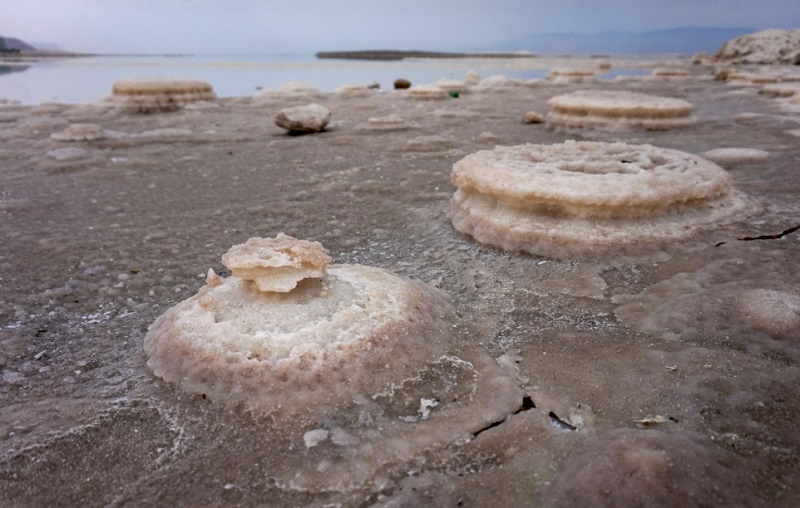
The Dead Sea is one of the most famous bodies of water in the world, yet most people only know two things about it: you can float effortlessly, and “nothing lives there.” Both ideas come from one central fact: its extreme saltiness.
Situated between Israel, Jordan, and the West Bank, this hypersaline lake has fascinated scientists, travelers, and historians for decades. Its water is so dense and mineral-rich that it challenges what is normally possible for life, geology, and even the human body.
Understanding how salty the Dead Sea is is not just a fun fact for travelers. It connects to climate change, regional water management, unique health tourism, and the survival of rare microorganisms that can live in conditions that would kill most other species.
This Eureka guide explains everything you need to know about Dead Sea salinity—how salty it really is, why it became so extreme, what lives there, and how human activity is changing it—clearly, practically, and with real-world examples.
Key Takeaway
The Dead Sea has a salinity of roughly one-third salt by weight—around ten times saltier than typical seawater—because it is landlocked, evaporates rapidly, and continuously accumulates minerals, creating a dense, mineral-rich, hypersaline lake that shapes its unique ecology, tourism, and slow shrinkage over time.
What Is the Dead Sea?
The Dead Sea is a landlocked, hypersaline lake located in the Jordan Rift Valley, bordered by Israel, Jordan, and the West Bank. It is not a sea in the oceanic sense but a terminal lake, meaning water flows in but does not flow out.
The lake is famous for being one of the saltiest bodies of water on Earth and for lying at the lowest land elevation on the planet, more than 400 meters (over 1,300 feet) below sea level. This unique combination of depth, heat, and isolation creates an environment where typical fish and aquatic plants cannot survive.
Readers should care about the Dead Sea because its salinity drives health tourism (mud and mineral treatments), informs climate and water management debates in the region, and serves as a natural laboratory for studying extremophile organisms and long-term climate history.
History, Background, and Context
The Dead Sea and the surrounding Jordan Rift Valley were formed by tectonic activity along the boundary between the African and Arabian plates. Over hundreds of thousands of years, water accumulated in this depression as rivers and streams flowed down into the basin.
In past geological periods, larger lakes covered the region, and the water level was significantly higher than it is today. As climate conditions shifted and inflows decreased, evaporation dominated, concentrating salts and minerals and leaving behind the much smaller, extremely salty Dead Sea we know now.
Historical and religious texts reference the area for its symbolic and strategic significance, while modern scientists drill deep sediment cores from the Dead Sea bed to reconstruct climate and hydrological patterns over tens to hundreds of thousands of years.
Types and Measures of Salinity
Salinity is not just “how salty something tastes”; it is a measurable property describing how much dissolved salt is in water. In the context of the Dead Sea, there are several useful ways to understand it:
Mass percentage salinity: The Dead Sea has about 30–34% dissolved salts by weight, compared to roughly 3.5% in most oceans.
Grams per liter (g/L): Each liter of Dead Sea water can leave behind roughly 250–300 grams of salt when fully evaporated, whereas typical seawater leaves about 35 grams.
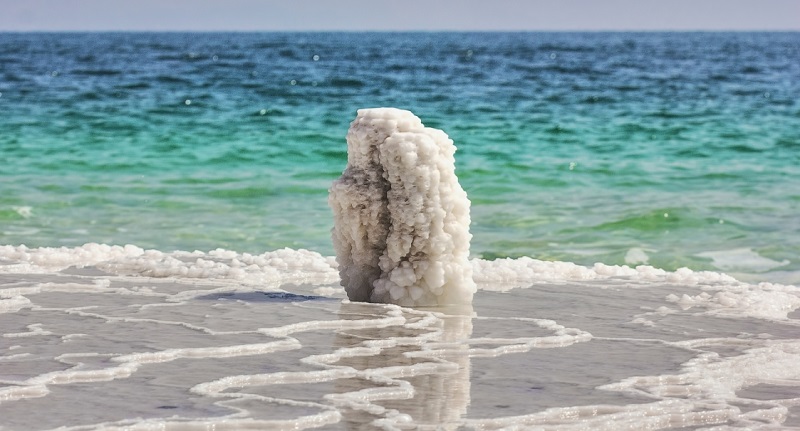
There are also variations in salinity within and across hypersaline environments:
- Typical ocean: About 3.5% salinity.
- The Dead Sea: Around ten times saltier than the ocean, with a unique mineral profile.
- Other hypersaline lakes: Some smaller lakes can be even saltier, but the Dead Sea is one of the best-studied and most accessible, making it a global reference point for extreme salinity.
How the Dead Sea Becomes So Salty
The Dead Sea’s extreme salinity is the result of a simple but powerful process repeated over thousands of years.
Step 1 — Water flows in
The Jordan River and several smaller streams and seasonal wadis carry freshwater and dissolved minerals from the surrounding mountains and highlands into the Dead Sea basin.
Step 2 — No outlet
Unlike many lakes that drain into rivers or the sea, the Dead Sea has no natural outlet. Water can leave only by evaporating into the hot, dry air.
Step 3 — Evaporation concentrates salts
Under intense desert heat and low humidity, water evaporates quickly while salts and minerals, such as sodium, magnesium, calcium, potassium, and bromides, stay behind. Over time, the concentration increases.
Step 4 — Long-term accumulation
Because this evaporation–accumulation cycle has been happening for thousands of years, the lake has become a dense brine. The water’s density is so high that people can float easily on the surface, a direct result of the dissolved salts and minerals.
Key Numbers, Composition, and Comparisons
The Dead Sea is not just “saltier”; its mineral composition is different from that of normal seawater.
- Salinity level: Around 30–34% by weight, compared to roughly 3.5% for most oceans.
- Salt yield per liter: Approximately 250–300 grams of salts per liter upon evaporation.
- Total salt content: Estimated in the tens of billions of tons across the entire lake.
A meaningful composition comparison:
| Property | Dead Sea (Approx.) | Typical Ocean (Approx.) |
| Salinity (by weight) | 30–34% | 3.5% |
| Density (g/mL) | ~1.24–1.25 | ~1.02–1.03 |
| Dominant salt | Magnesium, potassium, bromides, sodium | Sodium chloride (table salt) |
| Sodium chloride proportion | Roughly 10–20% of salts | Majority of salts |
This unusual balance of magnesium, potassium, and bromides is one reason Dead Sea mud and minerals are widely marketed in cosmetics and therapeutic treatments.
Pros and Cons of Extreme Salinity
Pros
- ✔ Easy floating for swimmers due to high water density, creating a unique tourism experience.
- ✔ Mineral-rich water and mud often used in spa, dermatology, and wellness treatments.
- ✔ Hypersaline conditions create a natural laboratory for studying extremophile microbes and potential analogs for life in extreme environments on other planets.
Cons
- ✘ Normal fish, aquatic plants, and most larger organisms cannot survive in the water.
- ✘ High salinity can be dangerous if swallowed or if it gets into eyes or open wounds.
- ✘ Long-term changes in salinity linked to water diversion and climate stress contribute to shrinking shorelines and sinkholes around the lake.
Advanced Information: Life, Geology, and Climate Signals
Despite its name, the Dead Sea is not completely lifeless. While fish and typical aquatic plants cannot survive, certain microorganisms—such as halophilic (salt-loving) bacteria, archaea, and some fungi—can live in the brine, especially in zones with slightly lower salinity or near underwater freshwater springs.
In 2010–2011, scientific dives and underwater surveys documented freshwater springs at the Dead Sea floor, where less salty water seeps in and creates micro-habitats that support microbial mats and biofilms. These tiny ecosystems highlight how even extreme environments can harbor specialized life.
Deep drilling projects into Dead Sea sediments have revealed alternating layers of salt, mud, and other deposits, which record past climate cycles. Periods where the lake shrank or even nearly dried out leave thick salt layers, while wetter phases produce more clay and organic-rich sediments, helping scientists reconstruct regional climate history over tens of thousands of years.
How to Experience and Use the Dead Sea Safely
Step 1 — Plan the visit season
Choose cooler months where possible, as summer heat can be intense. Many visitors stay in nearby resort areas on the Israeli or Jordanian shores for easy access and facilities.
Step 2 — Enter the water carefully
Walk slowly into the water and lean back gently to float. The high density will keep the body buoyant with minimal effort, but sudden movements can cause splashes that irritate eyes and mouth.
Step 3 — Limit time in the water
Staying in the water too long can dry and irritate skin. Short sessions, followed by a freshwater shower, are usually recommended, especially for visitors with sensitive skin or health conditions.
Step 4 — Use mud and spa treatments wisely
Many beaches offer Dead Sea mud for skin treatments. Apply to clean skin, let it sit briefly, and rinse thoroughly. People with skin conditions should follow medical advice before use.
Step 5 — Protect the environment
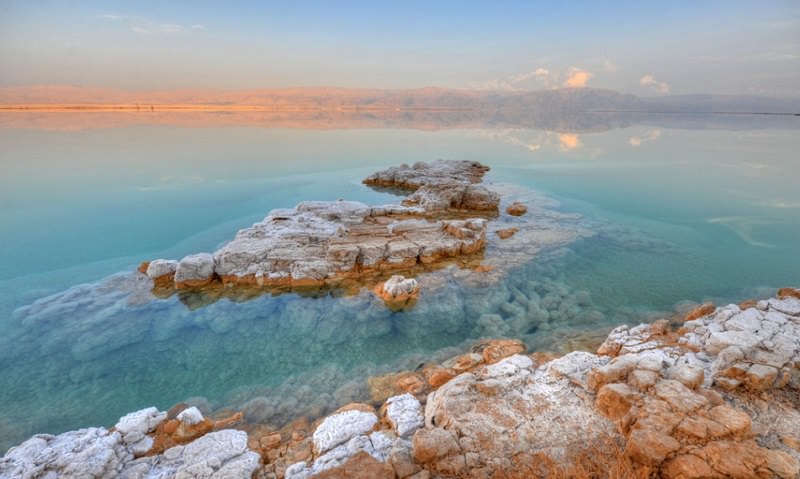
Stick to designated access points, avoid disturbing natural salt formations, and follow local guidelines, as the shoreline is affected by sinkholes and ongoing ecological changes.
Hidden Benefits and Unique Features
Beyond the obvious “float in salty water” experience, the Dead Sea offers several lesser-known advantages:
High atmospheric pressure and mineral-rich air may create a unique microclimate that some people find beneficial for certain respiratory or skin conditions.
Cosmetic and therapeutic industries use extracted minerals and mud in a wide range of skincare products, generating economic value for the region.
Scientific tourism and field courses bring students and researchers to the area to study geology, hydrology, and extremophile microbiology in a real-world context.
Comparisons with Other Seas and Lakes
Comparing the Dead Sea to other water bodies helps clarify just how exceptional its salinity is.
| Water Body | Approx. Salinity | Type | Key Feature |
|---|---|---|---|
| Typical Ocean | ~3.5% | Open ocean | Supports diverse marine life |
| Mediterranean Sea | ~3.8% | Semi-enclosed sea | Higher salinity than average ocean |
| Dead Sea | ~30–34% | Hypersaline terminal lake | Strong buoyancy, limited macroscopic life |
| Great Salt Lake | ~5–27% (varies) | Hypersaline lake | Salinity varies with water level |
While some smaller hypersaline lakes can exceed the Dead Sea’s salinity at times, very few combine such high salinity, large size, and intensive long-term study.
Expert Recommendation
The ideal “user” of the Dead Sea is not just a tourist but anyone interested in the intersection of environment, health, and science. It is an excellent choice for travelers seeking a unique natural experience, wellness treatments, and dramatic desert landscapes.
However, it is not suitable for typical water sports, snorkeling, or diving, and children and non-swimmers must be closely supervised due to the sting and risk if water is ingested. People with certain medical conditions should consult a healthcare professional before extended exposure.
From an environmental perspective, the Dead Sea is a warning signal: water diversion, climate change, and industrial mineral extraction are all changing its level and chemistry. Understanding its salinity means understanding broader pressures on water resources in the region.
Conclusion
The Dead Sea is extraordinarily salty—roughly ten times saltier than the ocean—because it sits in a deep, landlocked basin where water flows in but only leaves through intense evaporation, concentrating salts over thousands of years. This extreme salinity creates a distinctive mineral composition, unusual buoyancy, and an environment where only specialized microorganisms can survive.
At the same time, the Dead Sea’s shrinking shoreline and rising salinity are closely tied to human activity and climate stresses, making it both a natural wonder and a case study in environmental change. Its sediments preserve a long climate record, its waters support health tourism and research, and its extremophiles expand our understanding of where life can exist.
Despite its ominous name, the Dead Sea is less a symbol of lifelessness and more a testament to how geology, climate, and biology interact in one of Earth’s most extreme and fascinating places.
FAQs
Q: How salty is the Dead Sea compared to the ocean?
A: The Dead Sea is roughly ten times saltier than most oceans, with about 30–34% salinity compared to around 3.5% in typical seawater.
Q: Why is the Dead Sea so salty?
A: It is extremely salty because it is a landlocked lake with no outlet; water flows in carrying minerals, then evaporates in the hot desert climate and leaves salts behind, which accumulate over thousands of years.
Q: Can anything live in the Dead Sea?
A: Fish and most larger aquatic organisms cannot survive there, but specialized microorganisms such as halophilic bacteria, archaea, fungi, and microbial communities near underwater springs can live in its extreme conditions.
Q: Is the Dead Sea really the lowest point on Earth?
A: Yes, the shoreline of the Dead Sea region is the lowest exposed land elevation on Earth, more than 400 meters below sea level.
Q: Why do people float so easily in the Dead Sea?
A: The high concentration of dissolved salts makes the water much denser than normal seawater, increasing buoyancy so that the human body floats with very little effort.
Q: Is it safe to swim in the Dead Sea?
A: Short, supervised visits are generally safe at designated beaches, but you should avoid swallowing the water, protect your eyes, limit time in the water, and rinse off afterward due to the extreme salinity.
Q: Is the Dead Sea shrinking?
A: Yes, the water level has been dropping for decades due to reduced inflow from the Jordan River, regional water use, and climate factors, leading to shoreline retreat and sinkhole formation.
Q: What makes Dead Sea salt different from regular sea salt?
A: While normal sea salt is mostly sodium chloride, Dead Sea salts contain higher proportions of magnesium, potassium, and bromides, which are often used in therapeutic and cosmetic products.