
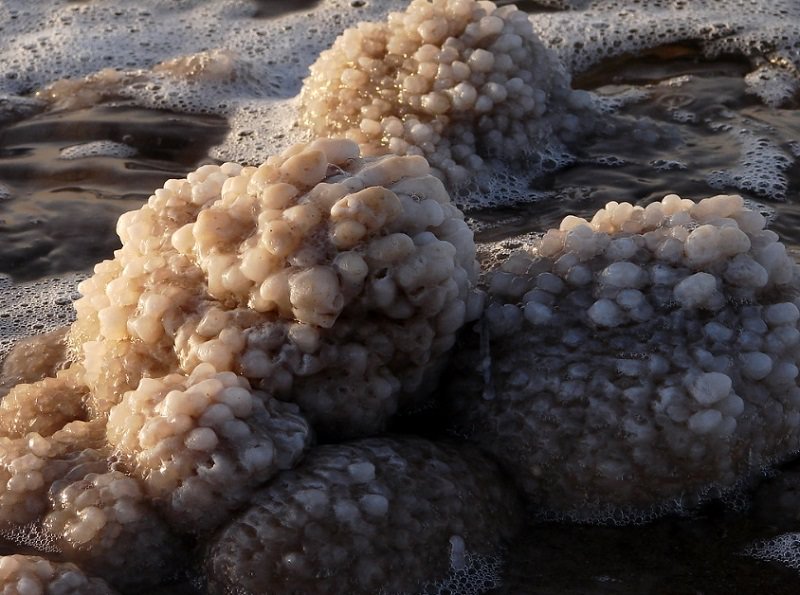
The Dead Sea, one of the most extraordinary natural wonders on Earth, sits between Jordan, Israel, and the West Bank. Despite its name, this hypersaline lake is not truly dead—it hides a fascinating microscopic world adapted to one of the most extreme environments on the planet.
With a salinity of roughly 34%, the Dead Sea is nearly ten times saltier than most oceans. These conditions make survival impossible for fish and aquatic plants, but not for all forms of life. In fact, specialized microorganisms, algae, and bacteria have evolved remarkable adaptations to thrive in these briny waters.
Where is the Dead Sea Located?
The Dead Sea lies in the Jordan Rift Valley, bordered by Israel and Jordan, and is the lowest point on Earth, resting about 430 meters (1,411 feet) below sea level. It is a landlocked lake, meaning it has no outlets. The Jordan River feeds it with freshwater, but as water evaporates under the desert sun, salt accumulates, making the lake denser and saltier over time.
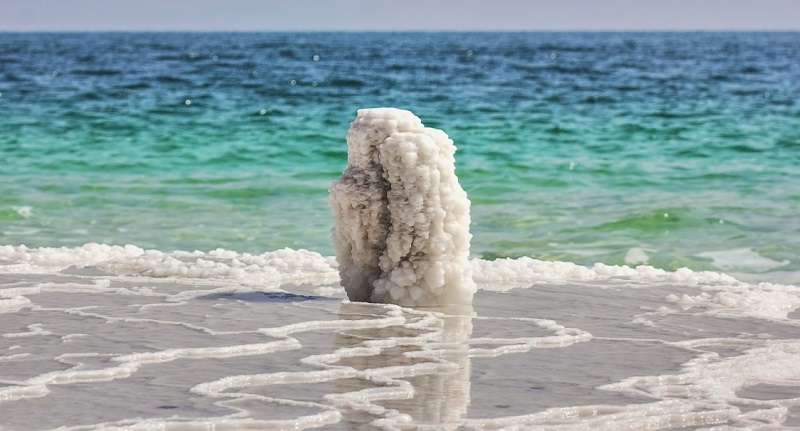
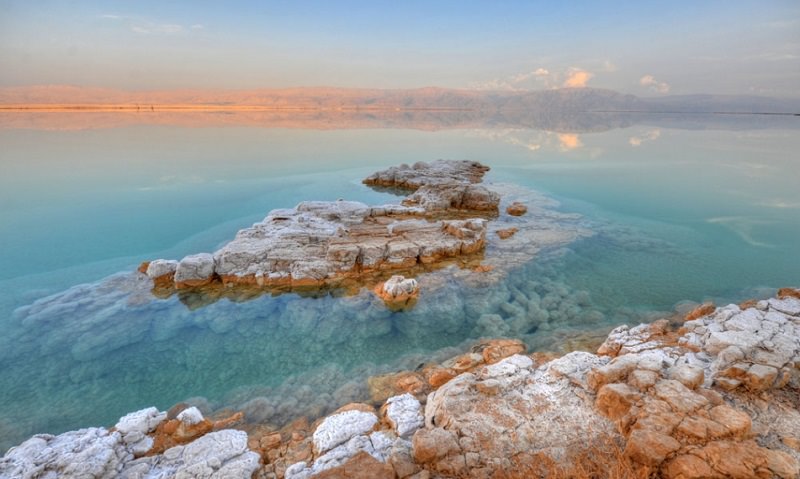
Due to water diversion and climate change, the Dead Sea’s surface area has been shrinking over recent decades—a phenomenon scientists call desiccation. This ongoing retreat reveals spectacular salt formations and exposes vast sinkholes along the shores.
Microscopic Life in the Dead Sea
Contrary to its ominous name, the Dead Sea supports a hidden community of life. In the 1930s, microbiologist Benjamin Elazari-Volcani discovered the presence of microorganisms in its extreme conditions.
These include:
- Halophilic archaea: Tiny salt-loving microorganisms that thrive where few others can survive.
- Dunaliella salina: A green microalga that produces protective carotenoids, turning the water reddish under certain conditions.
- Halobacteria: Microbes that use light-sensitive pigments to generate energy, creating colorful blooms.
These extremophiles don’t just survive—they flourish in their niche, forming a self-sustaining ecosystem within a world of salt and heat. Their survival strategies, such as salt-balanced cellular structures and protective biochemicals, mirror potential mechanisms for extraterrestrial life in hypersaline environments like those on Mars or Europa.
Why Can’t Fish Live in the Dead Sea?
Fish cannot inhabit the Dead Sea because of extreme osmotic pressure caused by high salinity. When freshwater fish enter the Dead Sea—usually via flooding from the Jordan River—they rapidly dehydrate and die.
For reference, ordinary seawater has an average salinity of about 3.5%, while the Dead Sea reaches up to 10 times higher levels. Since no fresh inflow balances out the salt concentration, the lake traps minerals like magnesium, calcium, and potassium, making it uninhabitable for typical marine organisms.
Freshwater Springs Beneath the Dead Sea
In recent years, diving missions and underwater mapping have revealed networks of freshwater springs at the bottom of the Dead Sea. These hidden oases, discovered around 2010, harbor a surprisingly diverse array of microorganisms.
Around these springs, scientists have found biofilms—dense microbial mats—covering rocks and sediments. These communities include cyanobacteria and halophilic archaea, proving that where freshwater seeps meet saltwater, life finds a way to persist. Researchers continue to study these interactions to understand how microbial ecosystems adapt to such dramatic chemical gradients.
When the Dead Sea Turns Red
A rare but spectacular phenomenon occurs when the Dead Sea’s salinity temporarily decreases after heavy rainfall or flooding. In 1980 and again in recent years, satellite images showed parts of the Dead Sea turning deep red. This happens when Dunaliella algae bloom and attract red-pigmented halobacteria, giving the water a striking crimson hue.
This color change is temporary but reveals how shifts in salinity can trigger blooms of specific microorganisms, offering a glimpse into the delicate ecological balance within the Dead Sea.
Final Thoughts
The Dead Sea stands as a powerful reminder that life can endure in the most inhospitable places. While fish and plants cannot survive here, the microscopic world of halophilic organisms continues to adapt and evolve beneath the salty surface.
This unique hypersaline environment not only deepens our understanding of Earth’s extreme ecosystems but also provides clues to how life might exist beyond our planet. Far from lifeless, the Dead Sea teems with unseen vitality—proof that even in the harshest conditions, nature finds a way.