

WHY IS DRY NEEDLING ILLEGAL?
Dry needling has become one of the most widely requested pain-relief techniques in the U.S., yet it remains illegal or restricted in several states.
Many patients and therapists now ask:
“Why is dry needling illegal in some states?”
The answer is complex — involving safety concerns, licensing laws, medical scope-of-practice battles, and state regulatory differences.
- What dry needling actually is
- Why some states ban it
- PT vs. Acupuncturist legal battle
- Updated 2025 state-by-state legality
- Safety issues & side effects
- Licensing requirements
- What patients should know before treatment
Let’s begin.
What Is Dry Needling? (Updated 2025)
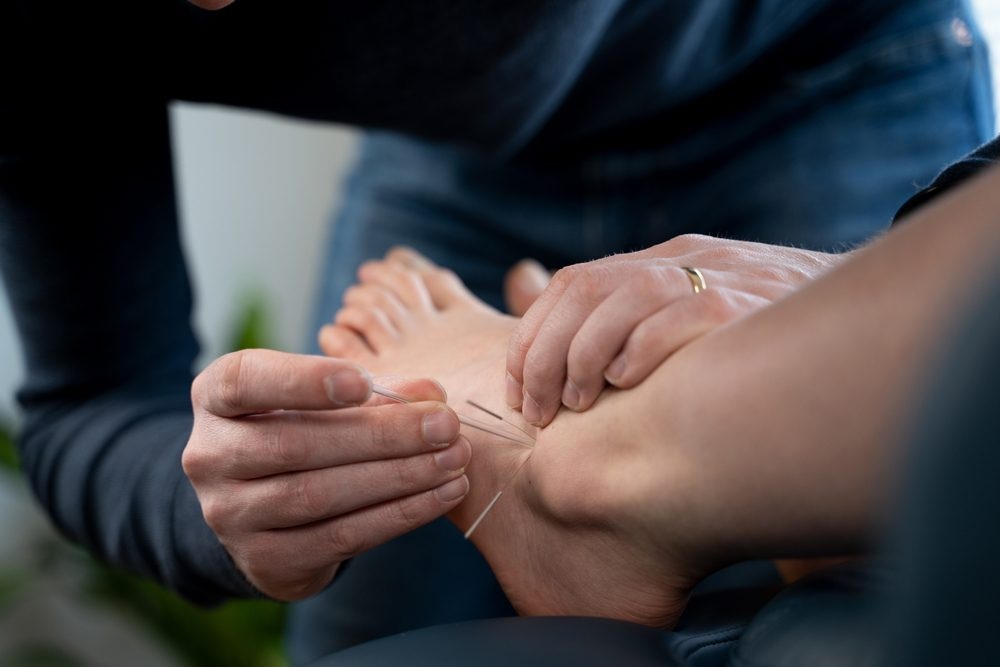
Dry needling is a therapeutic, minimally invasive technique where thin, sterile filiform needles are inserted into:
- Trigger points
- Muscle knots
- Fascial restrictions
The goal is:
- Reduce muscle tightness
- Improve blood flow
- Reduce pain
- Interrupt neuromuscular dysfunction
Is Dry Needling the Same as Acupuncture?
No — but they overlap.
| Dry Needling | Acupuncture |
| Based on modern Western anatomy | Based on Traditional Chinese Medicine (TCM) |
| Focuses on trigger points | Focuses on meridians & energy flow |
| Used mostly by PTs | Performed by licensed acupuncturists |
| Pain relief & muscular release | Holistic health & energy regulation |
However, both use identical needles, causing major regulatory overlap.
Is Dry Needling Illegal in Some States? (2025 Update)
Dry-Needling Laws by State — 50-State Comparison
Legend — Allowed = PTs may perform dry needling under state law/board guidance (usually with training/competency rules).
Prohibited = state law/board explicitly bars PTs (treated as acupuncture or invasive procedure reserved for acupuncturists/physicians).
Silent / Ambiguous / Conditional = no explicit statute or the board guidance is unclear; practitioners must check state board policy.
| Status | States (alphabetical) | Notes / Source |
| Prohibited (PTs may NOT perform dry needling) | California, New York, Oregon, Washington, Hawaii | These five states classify needle insertion as acupuncture or otherwise prohibit PTs from performing dry needling; see state board notices and APTA summary. (American Physical Therapy Association) |
| Silent / Ambiguous / Conditional (no explicit statute or board silence) | Connecticut, Massachusetts, Michigan, Minnesota, Missouri, Oklahoma, (and several states where board guidance is evolving) | These states have little or mixed statutory language — practice may be allowed or restricted by board opinion; check the state PT board for the exact current rule. (APTA lists these as “silent/unclear” in its state mapping). (American Physical Therapy Association) |
| Allowed (PTs may perform dry needling under state scope/board rules) | Alabama, Alaska, Arizona, Arkansas, Colorado, Delaware, District of Columbia, Florida, Georgia, Idaho, Illinois, Indiana, Iowa, Kansas, Kentucky, Louisiana, Maine, Maryland, Massachusetts, Michigan, Mississippi, Montana, Nebraska, Nevada, New Hampshire, New Jersey, New Mexico, North Carolina, North Dakota, Ohio, Pennsylvania, Rhode Island, South Carolina, South Dakota, Tennessee, Texas, Utah, Vermont, Virginia, West Virginia, Wisconsin, Wyoming, (plus others depending on board rules)** | APTA’s compilation shows roughly 37 states + DC where dry needling is within PT scope (with competency/training requirements). Exact training/CE hours and documentation vary by state board—see state guidance. (American Physical Therapy Association) |
Note: Some states listed in the Allowed row above (e.g., Florida, Maryland) have had recent legislative or board updates permitting DN under specified conditions — confirm current CE/training requirements with each state board.
⭐ Yes. Five U.S. states currently ban physical therapists from performing dry needling.
As of 2025, the states where PTs CANNOT perform dry needling are:
- ❌ California
- ❌ New York
- ❌ Hawaii
- ❌ Washington
- ❌ Oregon
These states classify dry needling as acupuncture under state law, and PTs are not licensed acupuncturists.
States with No Clear Legal Status (Gray Zones)
Michigan, Minnesota, Oklahoma, Connecticut, Missouri, Pennsylvania, Massachusetts
These states neither explicitly allow nor ban PT dry needling, creating legal ambiguity.

States Where Dry Needling Is Allowed (regulated)
Most remaining states permit physical therapists to perform dry needling after completing specific training hours, ranging from 25 to 100+ hours.
Why Is Dry Needling Illegal? (Core Reasons)
Quick takeaways & editorial notes (EEAT / legal caution)
- Five states explicitly restrict or prohibit PT dry-needling: California, New York, Oregon, Washington, Hawaii. In those states, needle insertion is treated as acupuncture or an invasive procedure reserved for licensed acupuncturists or physicians. If you practice there, do not perform dry needling unless you hold the legally required acupuncture/medical license.
- Majority of states allow PTs to provide dry needling: But almost all require documented training, competency, and board compliance (hours and documentation vary widely). APTA’s state map is the best single source for current per-state details.
- “Silent” or ambiguous states are risky: If your state is listed as silent or if board guidance isn’t explicit, check your state PT board and malpractice/insurance carrier before performing dry needling.
- Laws change frequently: I used APTA’s latest consolidated summary and recent state board materials (2024–2025) — but state rules evolve rapidly (board opinions, legislative action, and court rulings). Always verify with the state board and current statutes before publishing or practicing.
Several interlinked factors shape dry needling laws:
⭐ 1. Safety Concerns
Dry needling involves inserting needles into muscles — which is medically considered an invasive procedure.
Incorrect technique can cause:
- Pneumothorax (collapsed lung)
- Nerve damage
- Excessive bleeding
- Infection
- Organ puncture
These risks require advanced anatomical training.
Acupuncture needles are medical devices; misuse can lead to serious injury.
⭐ 2. Training Requirements Dispute
Acupuncturists undergo:
- 2,000–3,000 hours of training
- Strict national board exams
- State licensing
Many physical therapists complete:
- 20–100 hours of weekend dry needling courses
This dramatic difference fuels the argument that PTs are inadequately trained for an invasive needle procedure.
⭐ 3. Scope-of-Practice Legal Battles
Acupuncture boards across several states argue:
“Dry needling is acupuncture by another name.”
They claim PTs are performing acupuncture without a license.
Physical therapy boards counter that:
“Dry needling is a neuromuscular therapy, not acupuncture.”
This regulatory clash drives most bans.
⭐ 4. Acupuncture Practice Acts
In states where acupuncture laws define needle insertion strictly as acupuncture, dry needling automatically becomes illegal for non-acupuncturists.
⭐ 5. Liability & Insurance Concerns
Insurance carriers in some states refuse to cover dry needling by PTs, citing:
- High malpractice risk
- Insufficient training
- Undefined scope of practice
This leads states to restrict or prohibit the treatment.
Dry Needling vs. Acupuncture: Why the Legal Battle Exists
| Dispute Topic | Acupuncturists’ View | PTs’ View |
| Training | PTs lack sufficient hours | Dry needling requires fewer hours |
| Safety | High risk if improperly trained | PTs have strong anatomy background |
| Ownership | Dry needling = acupuncture | Dry needling = physical therapy |
| Legal rights | PTs must be banned | PTs should be allowed with training |
A key quote from Seirin, global needle manufacturer:
“Use of acupuncture needles by individuals other than licensed acupuncturists or physicians may lead to serious injury.”
This supports stricter regulation.
Legal Issues Affecting Dry Needling
These laws influence dry needling bans:
✔ 1. Invasive Procedure Classification
Dry needling involves breaking the skin = invasive.
Many PT practice acts do not authorize invasive procedures.
✔ 2. Needle Purchase Restrictions
In some states, PTs legally cannot purchase needles unless licensed for acupuncture.
✔ 3. Requirement of Physician Supervision
Several states require MD supervision — something PT clinics generally do not have.
Potential Side Effects of Dry Needling
Dry needling is safe when performed correctly, but side effects may include:
- Bruising
- Soreness
- Muscle twitching
- Fatigue
- Fainting (rare)
- Temporary numbness
Serious but rare complications include:
- Pneumothorax
- Nerve injury
- Infection
This is why training standards matter.
Why These Laws Matter (Impact on Patients & Therapists)
✔ Fewer available therapists
Patients face longer wait times in banned states.
✔ Increased cost of treatment
Acupuncturists typically charge more per session than PTs.
✔ Limited treatment options
Patients with chronic pain may lose access to a beneficial therapy.
✔ Pressure on PTs to seek acupuncture licenses
Some therapists pursue full acupuncture degrees, but it requires:
- 3-year accredited program
- National certification exam
- State board requirements
Many PTs find this unrealistic.
How to Become a Licensed Acupuncturist (If a PT Wants to Perform Dry Needling Legally)
- Complete a 3-year Master’s degree in Acupuncture
- Pass the NCCAOM national board exams
- Meet state licensing requirements
- Complete clinical observation hours
- Maintain CEUs annually
Only after completing these steps can a practitioner legally insert needles in banned states.
Is Dry Needling Effective? (Evidence-Based Overview)
Research shows dry needling may help with:
- Myofascial pain syndrome
- Neck pain
- Back pain
- Sports injuries
- Chronic trigger points
However:
- Results vary
- Technique depends on practitioner skill
- More long-term studies are needed
Medical consensus:
Dry needling can be effective, but only when performed safely and with proper training.
FAQs
Why is dry needling illegal in California?
Because California classifies any needle insertion as acupuncture, PTs are not licensed to perform it.
Why is dry needling illegal in New York?
NY prohibits PTs from performing invasive procedures, including needle insertion.
Does dry needling hurt?
Most patients report mild discomfort, not significant pain.
What happens if dry needling hits a nerve?
Temporary tingling or numbness may occur. Serious damage is rare but possible.
Where is dry needling illegal?
California, New York, Oregon, Hawaii, and Washington.
CONCLUSION
Dry needling has proven helpful for countless patients, but the technique sits at the intersection of two legally protected professions — physical therapy and acupuncture. This overlap, combined with safety concerns and training disparities, has led several states to ban physical therapists from performing dry needling.
Understanding why dry needling is illegal (or restricted) requires recognizing:
- State laws differ dramatically
- Acupuncture boards protect licensed scope
- PT boards advocate for expanded practice
- Patient safety drives most regulations
If you plan to seek dry needling or practice it, ensure your state’s laws allow it — and always prioritize treatment from a properly trained, licensed practitioner.